DAVINCI / INSIGHTS
Effective access control is about far more than opening a door. It translates an organization’s authorization policy into a daily experience that should feel clear, dependable and respectful of its users.
Start with access policy, not the reader
Map who needs to enter each area, at what times, under whose approval and with what emergency requirements. A private residence, a hotel, a shared office and a restricted industrial zone all need different workflows. Visitor access, staff turnover and maintenance responsibilities should be addressed before selecting credentials.
RFID: convenient, but security varies
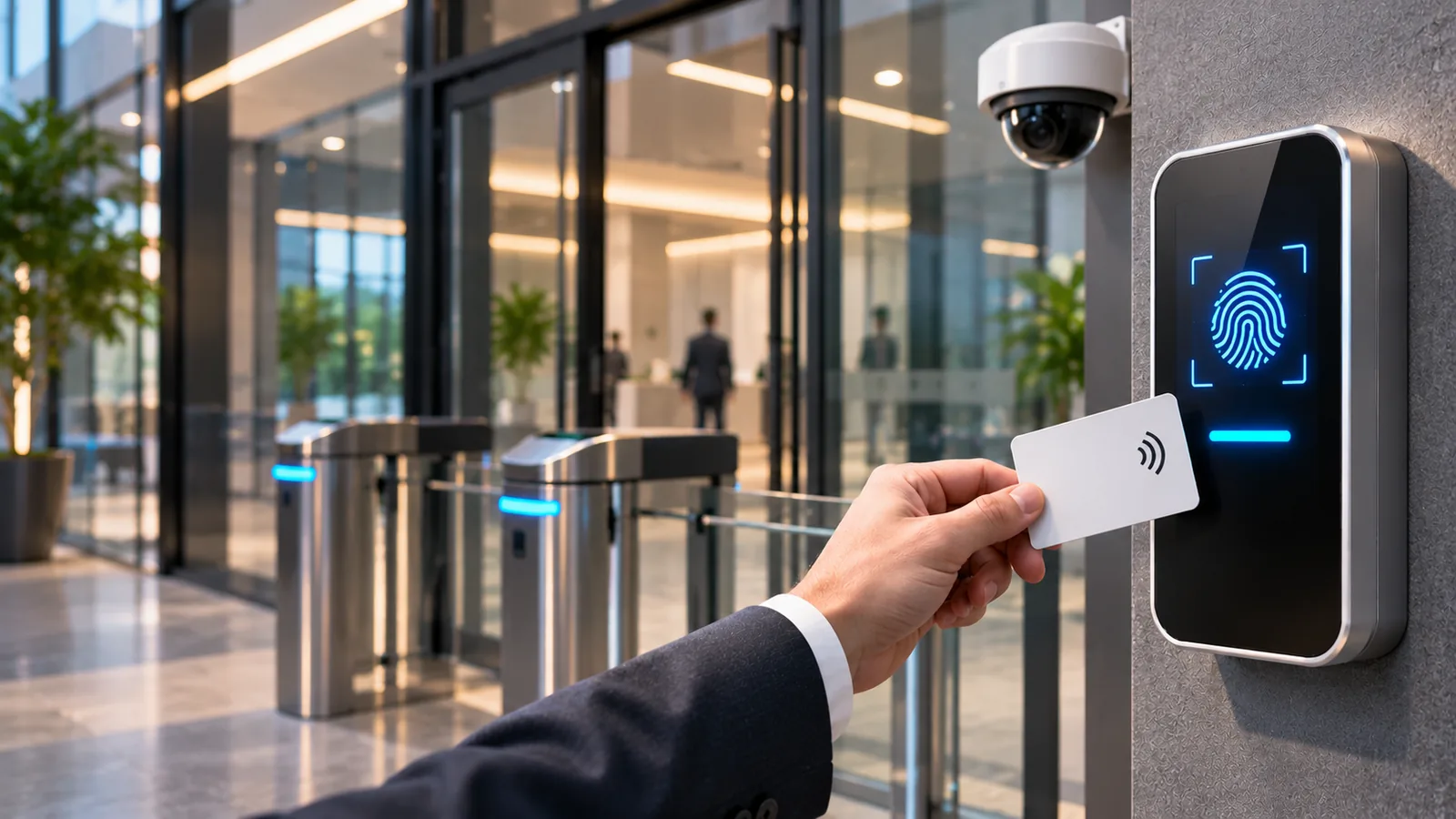
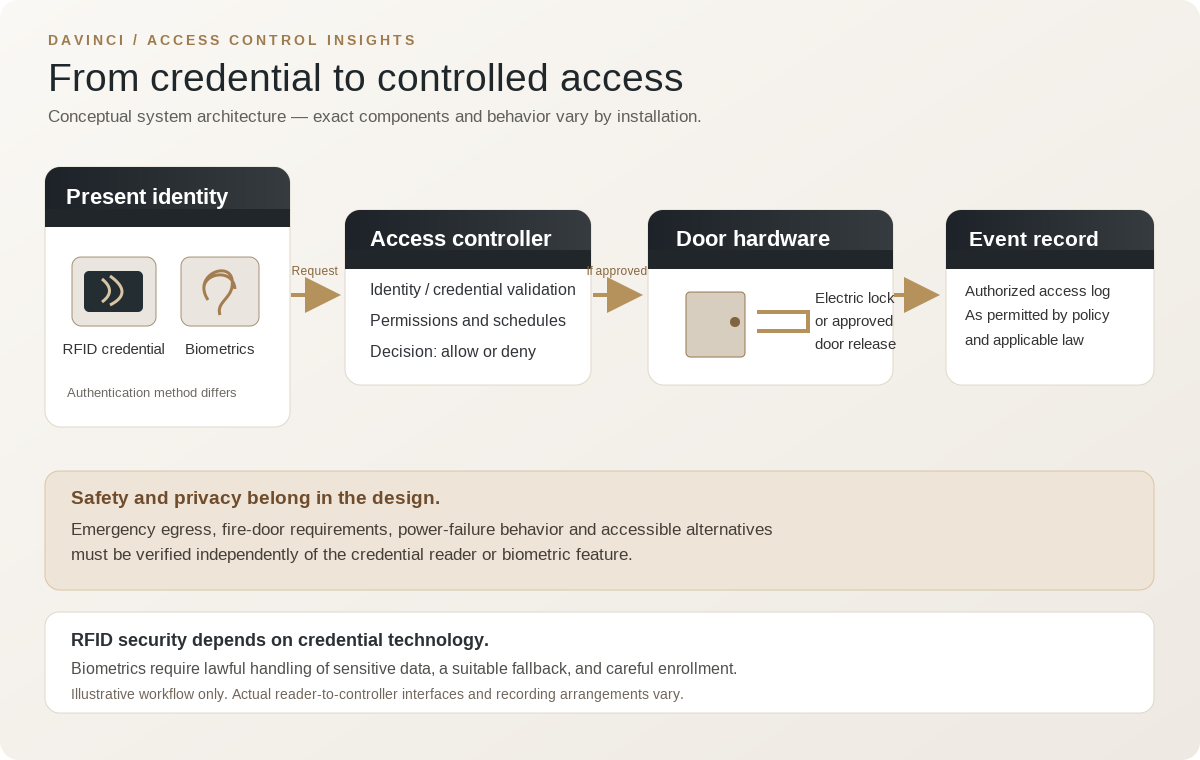
RFID cards, fobs and other credentials can make repeat access quick and manageable. Security, however, depends on the credential technology, authentication protocol, enrollment process and system configuration. Not every RFID card offers the same resistance to cloning or misuse. Lost credentials need a clear revocation procedure.
Biometrics: a different set of responsibilities
Fingerprint or facial recognition can offer a different authentication experience, but accuracy, lighting, user enrollment, accessibility and suitable fallback methods matter. Biometric information is sensitive: collection, storage, retention, lawful processing and access controls should be understood before deployment. A biometric reader is not automatically a stronger complete system.
The door and controller are part of the system
Readers communicate with controllers or other approved access architectures, and electric locks, exit devices, door contacts and power systems contribute to actual behavior. Verify device compatibility, power arrangements, door ratings, emergency release and safe egress under the laws and codes applicable to the building. Never design entry security at the expense of occupants’ escape.
Build for the full lifecycle
Define onboarding and offboarding, temporary guest access, user roles, lost credential reporting, audit review and periodic permission checks. A robust system is one that remains understandable as staff, tenants and spaces change.
Cybersecurity begins at the reader and controller
Assess whether credential data is protected in transit and at rest, how the controller authenticates devices and who can change access permissions. Where available, choose systems with supported secure credentials and documented update procedures rather than relying on older low-security card formats.
Protect the management interface using individual operator accounts, appropriate permissions and audit records. Emergency recovery and safe manual procedures need to be documented.
A short acceptance checklist
- Are new users and temporary visitors enrolled according to an approved policy?
- Can lost credentials be revoked promptly and verified as inactive?
- Does the door permit required egress during power or network faults?
- Are biometric data practices lawful, proportionate and adequately disclosed?
- Are maintenance responsibilities and audit access assigned?
DAVINCI perspective: The right access-control experience balances authorization, comfort, accountability, privacy and safety.