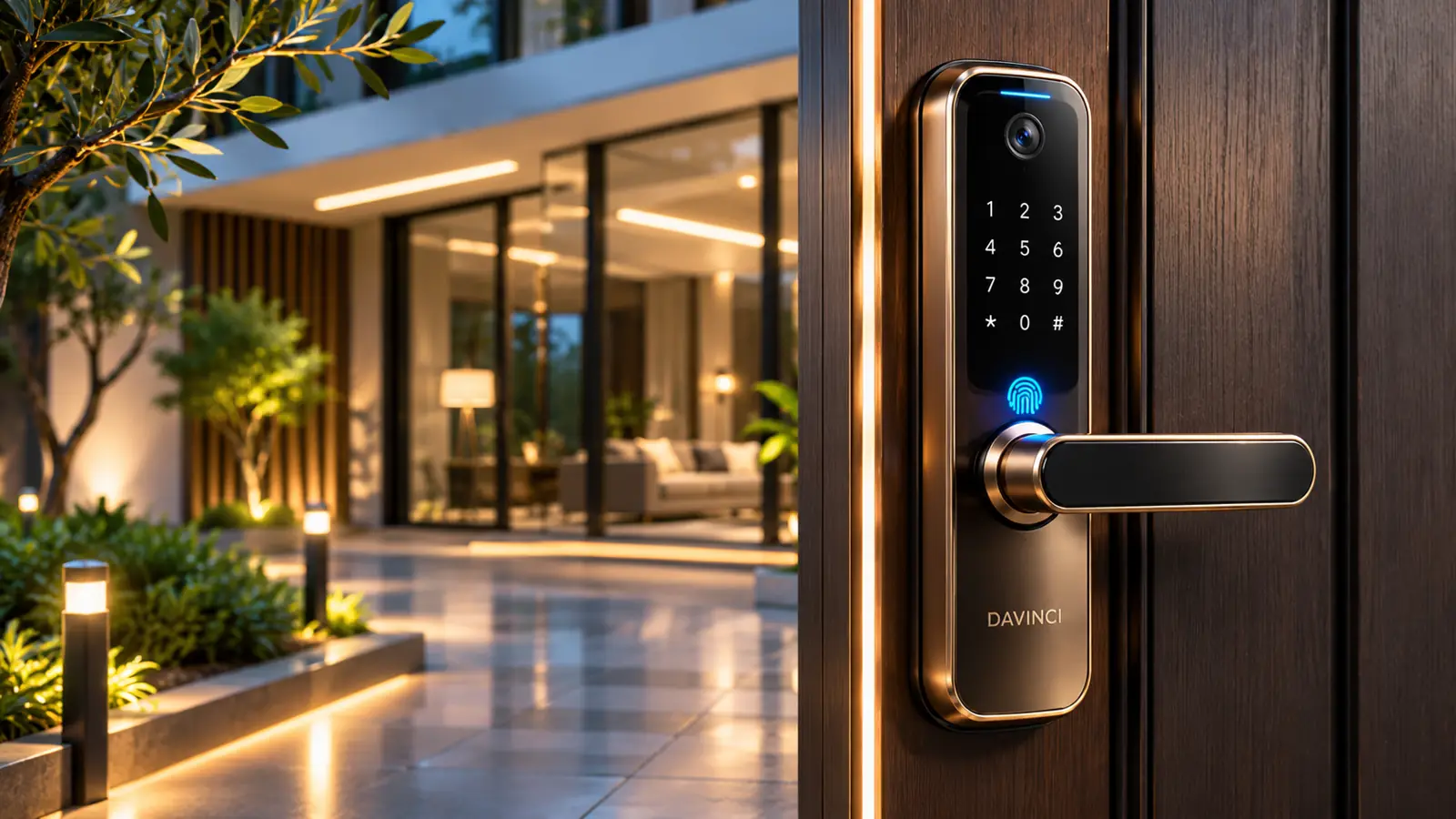
DAVINCI / INSIGHTS
The appeal of a smart lock is immediate: easier access, fewer physical keys and more control over who enters. A successful installation, however, depends on the door and the building just as much as on the lock’s digital features.
Choose access methods around real users
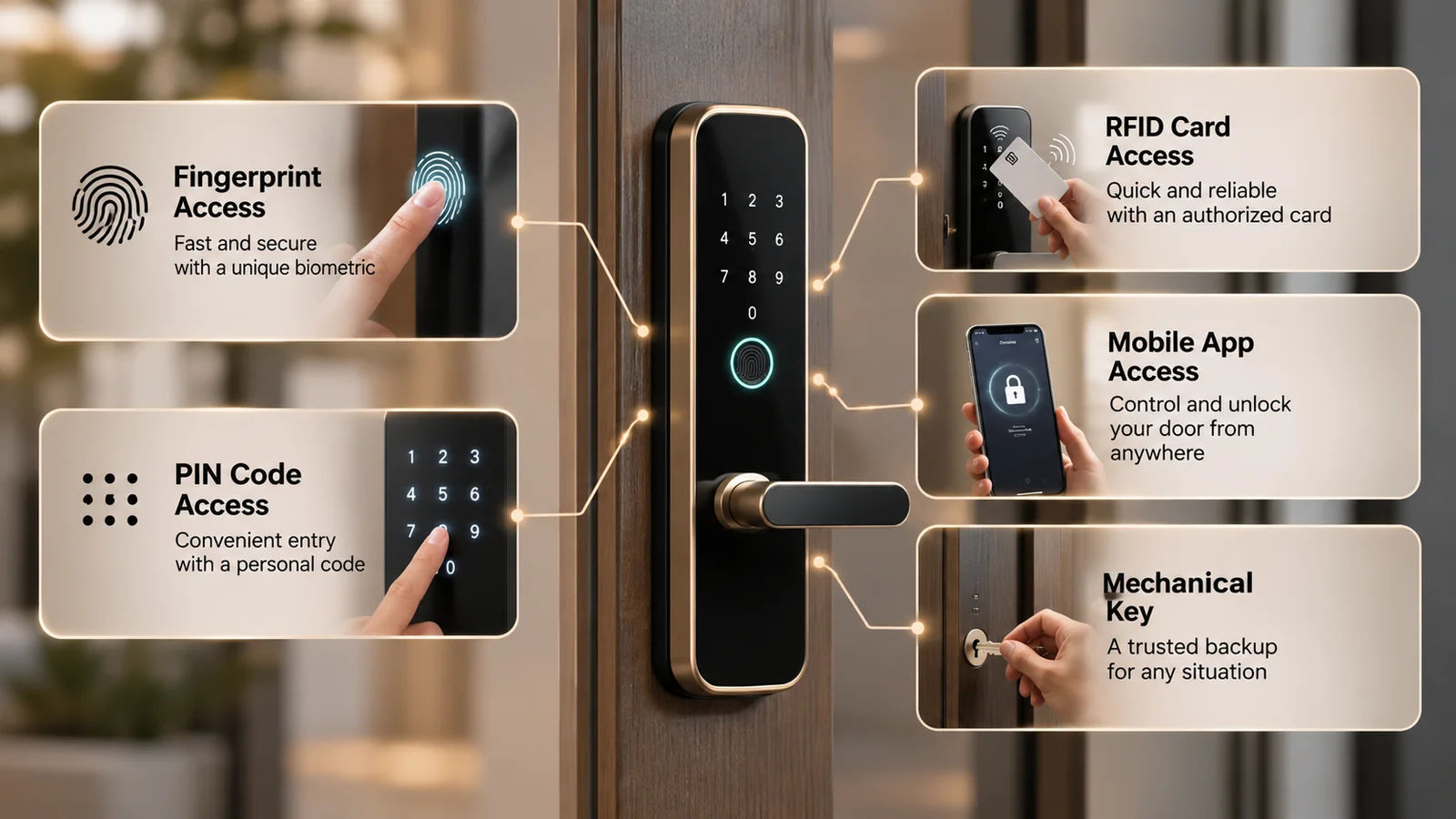
PINs, access cards, mobile credentials and biometrics provide different combinations of convenience, cost and operational responsibility. A family entrance, managed rental and staffed office have different expectations for temporary access, user turnover and lost credentials.
Review how easily authorized users can recover access when a phone is unavailable, batteries are low or a biometric reading fails. Recovery should not rely on a single fragile step.
Physical fit is fundamental
Door thickness, handing, backset, latch type, mortise dimensions and existing hardware determine compatibility. A lock that looks compatible in a product photograph may not fit the door or preserve its required rating.
Confirm the manufacturer-approved installation and any applicable fire-door or egress requirements. Security hardware must never compromise safe evacuation.
Connected is not the same as remotely controllable
Some locks support short-range local control, others depend on a gateway or supported radio network, and some apps provide only status or credential management. Availability of a mobile app does not prove that remote unlocking, voice commands or temporary credentials are supported.
Verify every requested feature against the exact lock model, firmware, regional service and gateway combination before purchase. Ask how the product behaves during an internet outage.
Understand power and failure behavior
Battery life varies with usage, wireless activity, environmental conditions and motor effort. Low-battery alerts, emergency power provisions and authorized mechanical override options should be evaluated where offered.
The terms fail-safe and fail-secure have specific implications in access-control design and should not be used casually. Match hardware operation to applicable life-safety rules rather than assuming one arrangement suits every opening.
Manage access over time
A lock remains secure through careful credential enrollment, removal of former users, reasonable PIN practices, supported firmware updates and appropriate handling of logs. Guest credentials should expire when no longer required.
For DAVINCI, a smart entrance should feel effortless because the difficult decisions were made carefully during design, installation and ongoing management.
Commissioning checklist for a reliable entrance
Before handing over the installation, test the latch and handle with the door open and closed, verify door alignment and closing force, and check that the specified mechanical or emergency access method works as documented. Test each enrolled credential, rejected credential, low-battery alert and any supported offline mode. Confirm the actual behavior of temporary access at the expiry time rather than trusting the app interface alone.
A practical access-control decision matrix
For family homes, prioritize simple everyday operation and a recovery path for children and visitors. For rental properties, prioritize controlled guest expiry, secure credential revocation and an auditable turnover process. For shared offices, evaluate enrollment ownership, access schedules, staff departure and incident records. In every case, validate the exact product and its local legal requirements.
DAVINCI perspective: Thoughtful planning starts with site conditions and real users. Product suitability, installation details and local requirements must always be checked for the actual project.