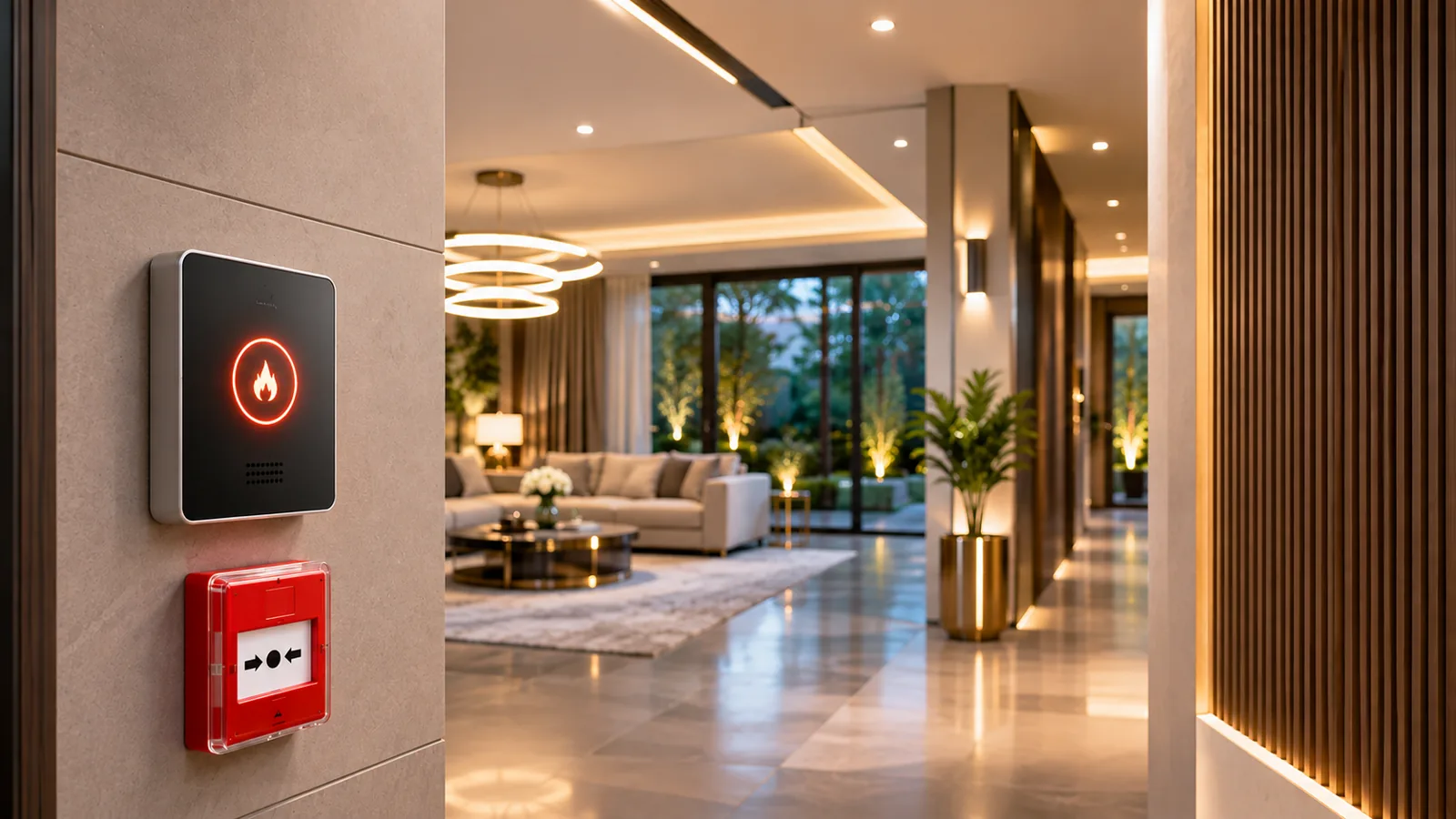
DAVINCI / INSIGHTS
Fire safety depends on more than installing a sensor on the ceiling. Detection, control, notification, evacuation planning and ongoing maintenance must operate together under an approved life-safety strategy.
The system has several connected functions
Initiating devices can include suitable automatic detectors, manual call points and other approved inputs. Fire alarm control equipment monitors the relevant circuits or communications, processes signals and activates the outputs required by the approved design.
Notification may involve audible devices, visual indicators or voice messages depending on occupancy, accessibility needs and applicable standards. Different buildings require different configurations.
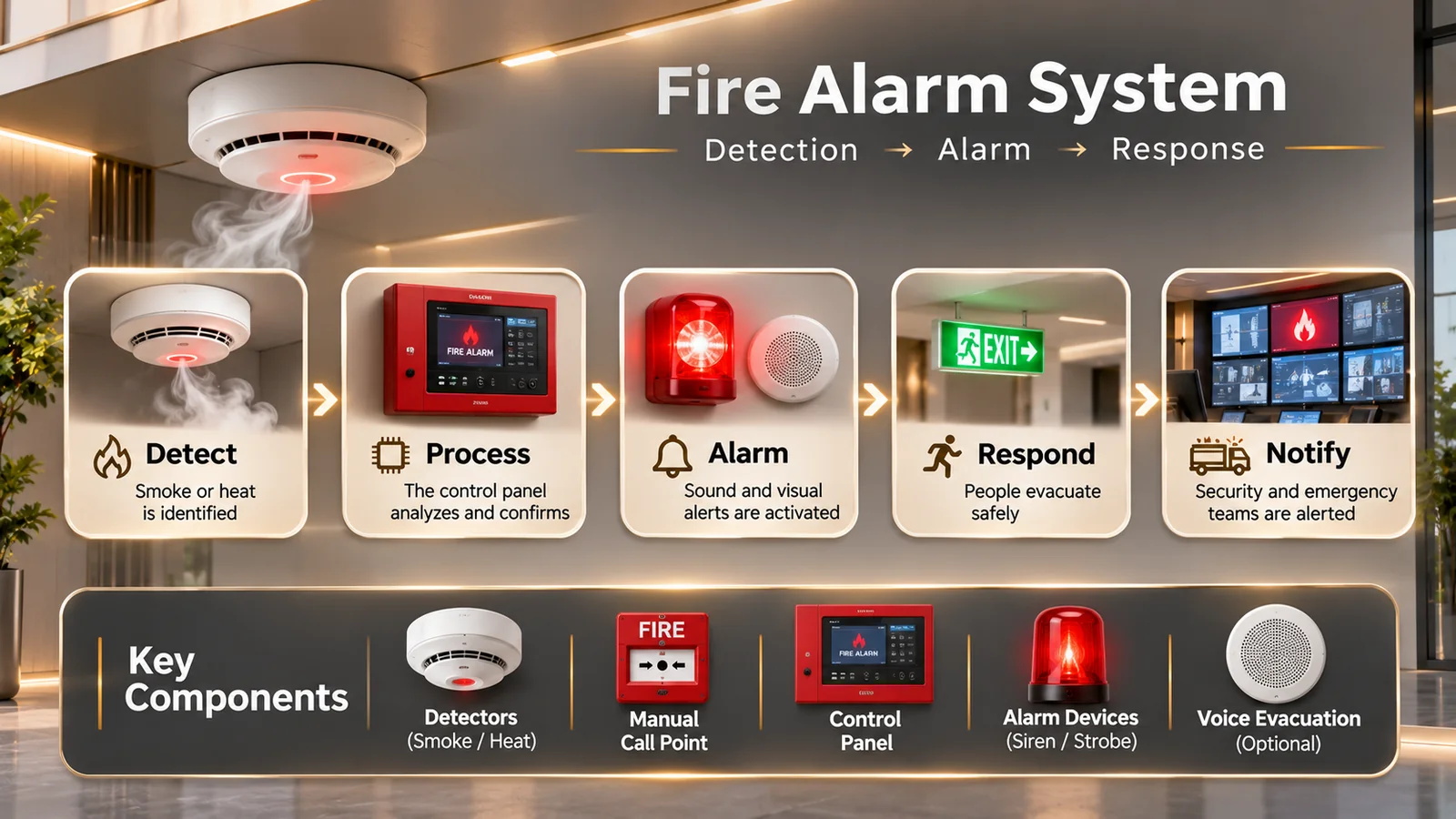
An alarm signal should lead to a defined response
The required sequence of operation should be documented before commissioning. In some buildings, the fire alarm may interact with access controls, smoke control equipment, lifts or other building services. Such interfaces require qualified design, coordination and acceptance testing.
Never assume that a connected home hub or consumer automation is an adequate substitute for an approved fire alarm control system.
Device selection depends on hazards
Smoke, heat, flame and other specialized detectors respond to different phenomena and are not interchangeable. Design must consider ceiling geometry, air movement, environmental nuisance factors, expected fire characteristics and the occupancy.
Selection and placement should be established by competent professionals using applicable fire codes, listed equipment and manufacturers’ instructions.
Reliability includes supervision and power
A properly designed fire alarm system considers fault detection, backup power and monitored circuits or networks as required. A detector that can send a smartphone notification does not necessarily provide code-compliant supervision or emergency notification.
Commissioning should verify actual device behavior, required alarm paths and the documented cause-and-effect sequence.
Maintenance sustains protection
Testing intervals, battery maintenance, device cleaning, impairment procedures and records should follow applicable requirements. Building alterations can invalidate an otherwise sound detector layout.
The DAVINCI principle is simple: intelligent fire protection is designed as a complete safety process, not a collection of appealing devices.
Write the cause-and-effect schedule first
A clear commissioning schedule links each initiating event to the required panel indication, occupant notification, monitored transmission and approved building-system interfaces. It should distinguish alarm, supervisory and fault conditions where applicable. Every interface needs an owner, acceptance criteria and a safe response when a connection fails.
Verify the entire alarm pathway
Qualified personnel should test representative initiating devices, notification appliances, supervision, standby power and documented interactions under the governing code and approved design. Record test results, defects, impairment procedures and maintenance responsibility. Never substitute a decorative illustration or a consumer smart-home routine for engineered life-safety documentation.
DAVINCI perspective: The best technology is measured by real outcomes, responsible operation and the confidence of the people who rely on it.