DAVINCI / INSIGHTS
The next generation of intelligent spaces is being shaped less by a single spectacular device than by how well products cooperate, protect data and remain useful throughout a building’s life.
From disconnected devices to coherent experiences
People rarely think in terms of gateways, protocols or firmware. They expect lighting, climate, access and safety functions to behave reliably. Meeting that expectation requires consistent interfaces, carefully designed automations and clear responsibility when something fails.
A coherent system also needs straightforward ways to change permissions, replace equipment and expand rooms without redesigning everything.
Why processing at the edge matters
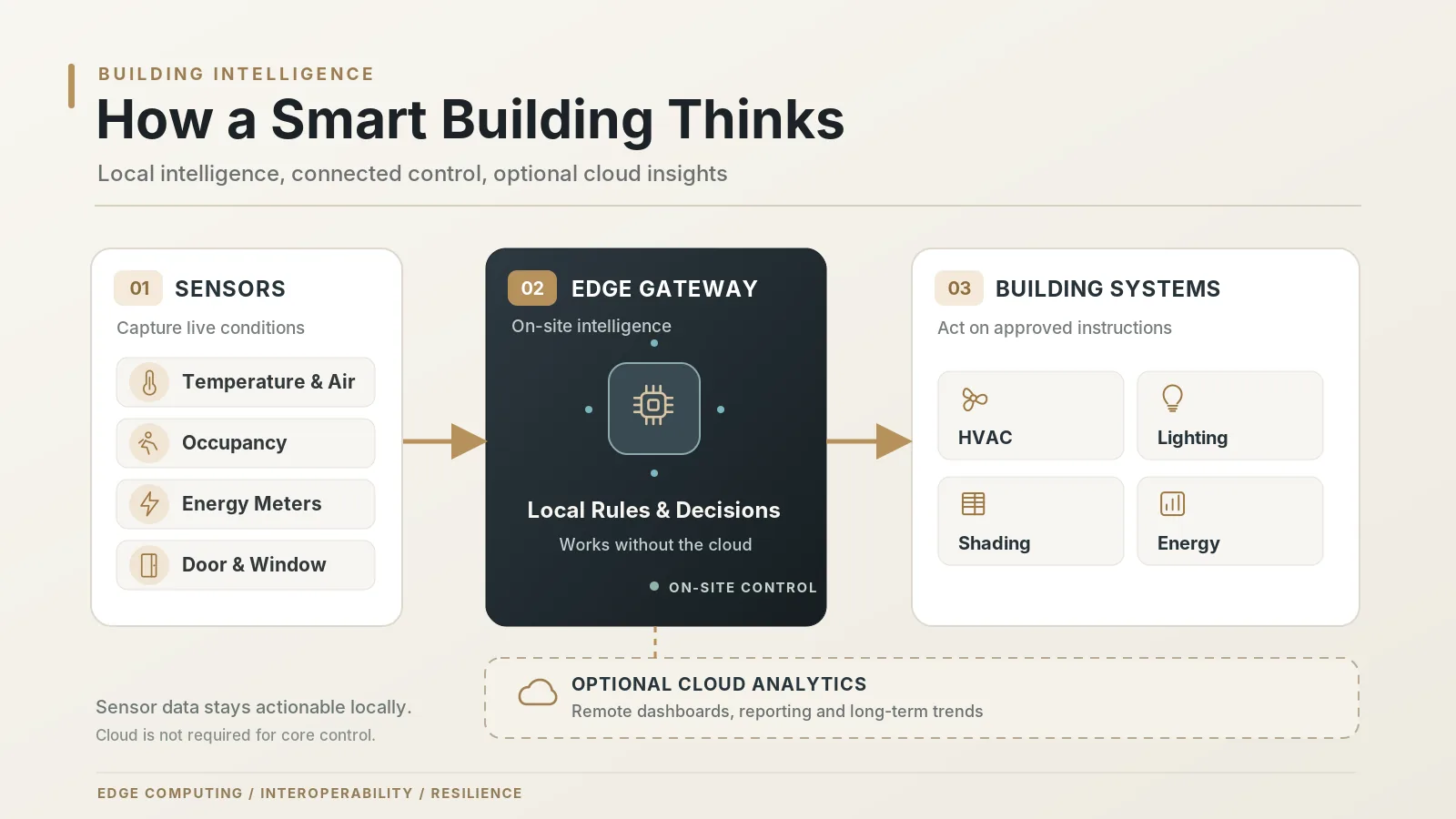
Edge processing means analyzing certain information on or near the device rather than sending every raw event to a distant cloud service. Depending on implementation, this can reduce latency, bandwidth demand or unnecessary transfer of sensitive information.
Edge intelligence is not automatically private or secure; local devices still need safe configuration, access controls and update support.
Interoperability is advancing, but verification remains essential
Standards and shared application models can make multi-brand environments easier to build. Nonetheless, real-world support depends on product versions, optional features and controller behavior. An interoperability label should start a compatibility conversation, not end it.
Before procurement, test critical user journeys across the exact chosen components.
Lifecycle support becomes part of the product
Smart equipment may remain installed for years while mobile operating systems, cloud services and cybersecurity threats evolve. Buyers should ask about security-update commitments, documentation, service options and how a product behaves when connectivity is unavailable.
Modular architectures and documented interfaces can reduce the cost and disruption of future changes.
Trust is the defining premium feature
A truly intelligent space respects privacy, stays predictable during outages, provides meaningful control and avoids unnecessary complexity. Technology should become quieter as the design improves.
For DAVINCI, the future of intelligent living is not merely more automation. It is technology that feels considered, coherent and dependable.
Evaluate innovation through measurable outcomes
Before adding AI-based occupancy analytics or predictive maintenance, specify the problem, baseline measurement, acceptable false-alert rate and expected operator response. Compare on-device processing with cloud processing in terms of latency, bandwidth, privacy, updates and resilience. More data does not automatically mean better decisions.
Design for a ten-year service life
Ask suppliers about software support periods, exportable configuration, documented APIs, component replacement and recovery if a cloud service closes. Use staged commissioning and maintain a clear inventory of firmware, network dependencies and security ownership. Future-ready buildings are those that can evolve without sacrificing everyday reliability or user trust.
DAVINCI perspective: The best technology is measured by real outcomes, responsible operation and the confidence of the people who rely on it.