DAVINCI / INSIGHTS
Fire detection begins with a deceptively simple question: what condition are we trying to detect, and how soon must people be warned? The answer varies from one room and building to another.
Smoke detection and heat detection are not interchangeable
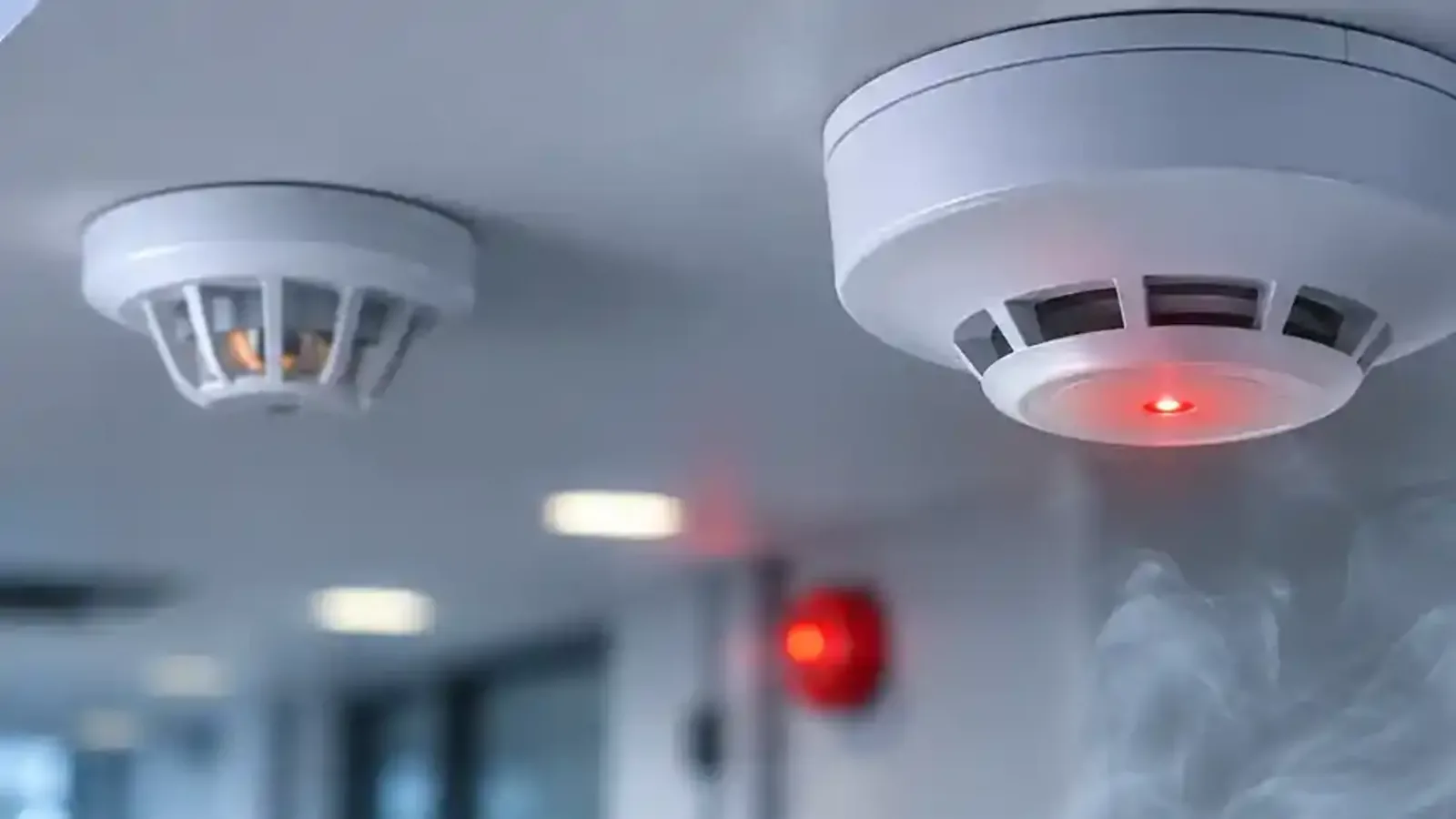
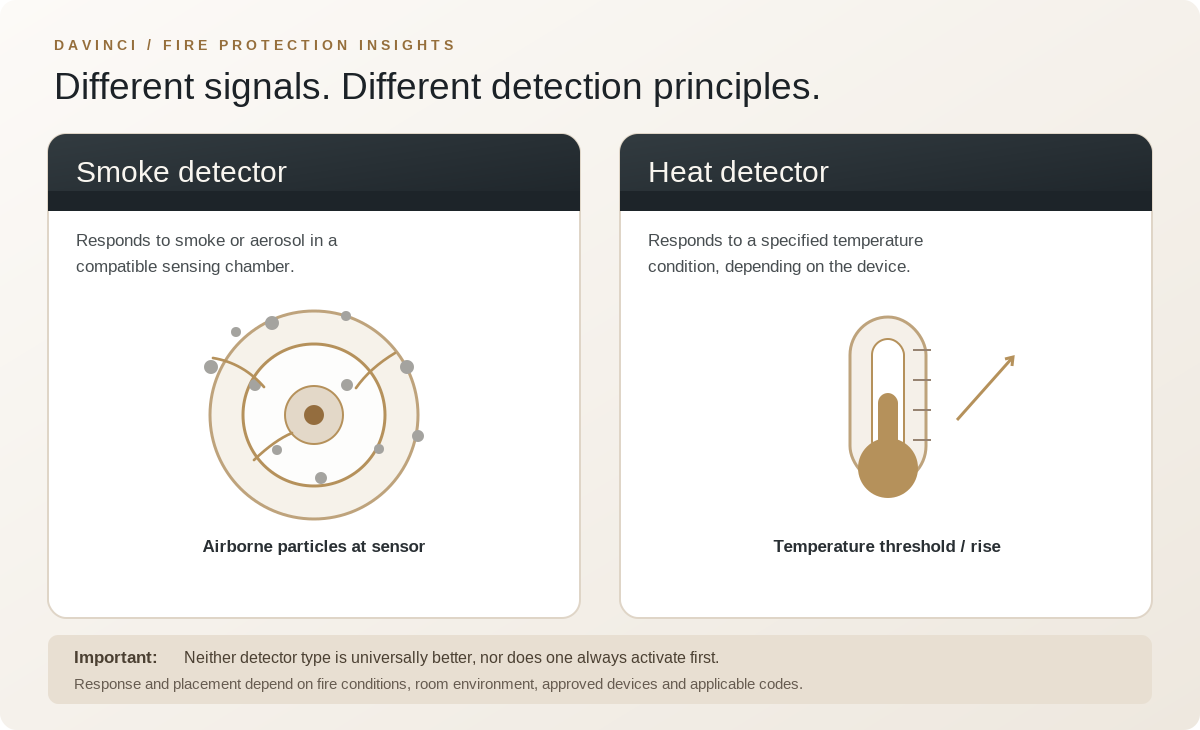
A smoke detector is designed to respond to specified airborne products associated with combustion, using a sensing principle appropriate to the device. A heat detector responds to temperature conditions, which may include reaching a fixed threshold or a defined rate of temperature rise. Different devices may behave very differently as a fire develops.
Because smoke can be produced before temperatures rise substantially at a detector location, appropriately designed smoke detection is often important for early warning. But smoke sensing can also be affected by dust, steam or other environmental conditions. Heat detection may be considered in locations where unwanted smoke alarms are likely, subject to the relevant codes, risks and design requirements.
Match the detector to the space
Consider a hotel bedroom, an office corridor, a commercial kitchen and a dusty industrial space. Their occupancies, air movement, ceiling structures and expected sources of unwanted alarms are not identical. A detector that is suitable in one environment may be ineffective or inappropriate in another.
Ceiling height, ventilation, partitions, maintenance access and the presence of other systems should be reviewed by qualified designers. Manual call points, notification devices and the alarm control system are also part of the overall life-safety design.
What about carbon monoxide and gas detectors?
Carbon monoxide detection and combustible-gas detection address different hazards and must not be confused with general smoke or heat detection. Device location, sensing range, approved applications and alarm responses require their own risk-based specifications.
Testing, maintenance and responsible claims
Detection performance depends on approved equipment, correct installation, commissioning, routine testing and ongoing maintenance. A connected app or attractive enclosure does not establish compliance with fire-alarm standards. Verify each product’s certifications and compatibility before making any claim about required use.
Common design errors to avoid
Do not assume a detector suitable for a corridor is automatically suitable for a cooking area, dusty workshop or unusually tall atrium. Avoid specifying a device from its appearance or app compatibility alone. The correct response depends on approved equipment, the environment, system architecture and code requirements.
Do not test installed smoke or heat detectors using improvised flames or unsafe methods. Follow the approved test equipment and instructions for the installed system, with maintenance performed by competent personnel.
Commissioning makes the design real
An accepted installation should be checked against the cause-and-effect schedule, notification requirements, available power and documented maintenance procedures. Owners need clear records of equipment locations, testing responsibilities and how to respond when a device reports a fault.
DAVINCI perspective: Fire protection is a system of decisions: detection, supervision, clear warning, safe response and long-term care. This article provides general context only and does not replace a code-compliant design by qualified professionals.